

Allameh Tabataba'i University Launches Alumni Association to Link 100,000 Graduates with Industry and Governance
Report by the Directorate for International Academic Cooperation–
(English Translation by Rasoul Firouzi)
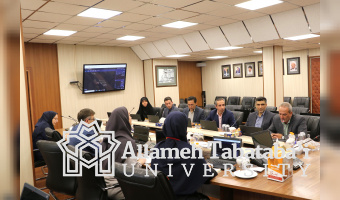
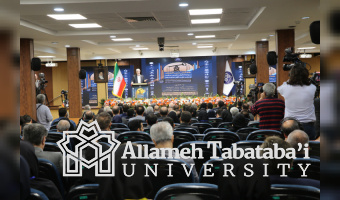
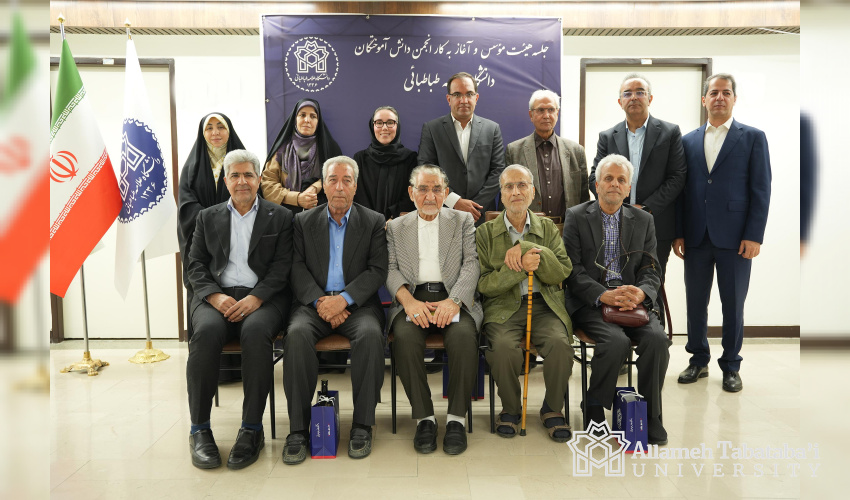
The inaugural meeting, held at the university’s central administration headquarters, brought together university leadership, senior government advisors, faculty deans, business executives, and prominent alumni. Speakers underscored the urgent need for academia to move beyond abstract theory and serve as a pragmatic driver of socio-economic progress.
ATU President, Dr Shoja Ahmadvand, framed the association as the "missing link" connecting the university's past, present, and future. "Universities have evolved beyond purely theoretical confines toward entrepreneurial and operational roles," Ahmadvand said. "Without an active alumni body, an academic institution risks isolation. This association will bridge the maturity of senior professionals with the innovation of the younger generation."
Ahmadvand announced that the university is establishing a comprehensive database detailing the career profiles and expertise of its 100,000-plus alumni to align academic training directly with labour market and executive demands. He also outlined plans for seed funds, joint research ventures, private-sector partnerships, and structured mentorship programs, while emphasizing that the association must maintain strict professionalism and avoid political factionalism.
Highlighting the macro-level importance of the initiative, Dr Ali Rabiei, Presidential Assistant for Social Affairs, emphasised that the country's most pressing challenges require deep social scientific insight rather than purely technical fixes. "Complex issues such as water resource management and energy policy are fundamentally social and cultural phenomena before they are technical or economic matters," Rabiei said. "Excluding the social sciences from national decision-making severely restricts development. This association must serve as a major advisory arm to address these systemic crises." Dr Rabiei added that genuine civic participation must extend beyond politics into robust, intermediary professional and academic institutions.
Dr Hadi Khaniki, a prominent communication sciences professor at ATU, noted that leading global universities are primarily guided and propelled by their alumni networks. He urged ATU to overcome its historical fragmentation by leveraging its social capital during periods of national strain. "We must not rely solely on past generations when building institutions; youth and women constitute the core of today’s skilled workforce," Khaniki warned, advocating for decentralized, networked structures and cross-disciplinary dialogue to bridge growing generational divides.
Shahindokht Molaverdi, Secretary-General of the Society for Protecting Women's Human Rights, called on the new body to avoid bureaucratic inertia and focus on measurable social impact. "Many professional associations begin with great enthusiasm but ultimately stall in endless, unproductive committees," Molaverdi said. "Specialized civic institutions must move beyond paperwork to actively assist the public and the state at critical junctures."
From an economic and governance standpoint, Dr Yahya Al-e Eshaq, President of the Iran-Iraq Joint Chamber of Commerce, and Dr Davood Danesh-Jafari, former Minister of Economy and retired ATU faculty member, emphasized the integration of field experience into state administration.
Al-e Eshaq referenced international administrative reforms, noting that modern governance requires policymakers to possess broad socioeconomic literacy alongside technical skills. Danesh-Jafari urged the university to invest heavily in information systems to maintain lifelong records of graduates, turning human resources into actionable social and economic capital.
Corporate leaders at the meeting also called for institutionalised ties between ATU's academic programs and commercial industries:
- Targeted Internships: Dr. Sarvenaz Dorvari, CEO of Agah Life Insurance, called for formalized placement mechanisms to introduce students—particularly at the graduate level—to the finance, insurance, and banking sectors, bridging the gap between theoretical coursework and practical market demands.
- Faculty-Level Hubs: Dr. Rasool Raeis-Jafari, CEO of the Sarakhs Free Trade-Industrial Zone, recommended decentralized, faculty-level alumni networks as the structural foundation of the organization, reducing operational friction while catering to specialized disciplines.
- Strategic Human Capital: Dr. Hossein Amir-Rahimi, Head of the National Center for the Productive Utilization of State Assets, and Dr. Seyed Ahmad Bolandnazar, founder of Fadak Olive Agro-Industry, affirmed the private sector's readiness to collaborate with the association as an independent, nationwide professional platform.
In the end of the session, Dr Hoda Ghaffari, ATU Vice-President for Cultural and Social Affairs, confirmed that the transition from the previous informal alumni framework to an officially recognised association follows national higher education regulations approved in 2020.
It is worth adding that the Founding Board has received the proposed charter for review and final ratification, after which the association will complete its formal legal registration and begin nationwide operations.
 Soroush