

ATU President Highlights Key Academic, Research, and Infrastructural Achievements over the Past Year
Report by the Directorate for International ACademic Cooperation–
Engish Translation by Rasoul Firouzi
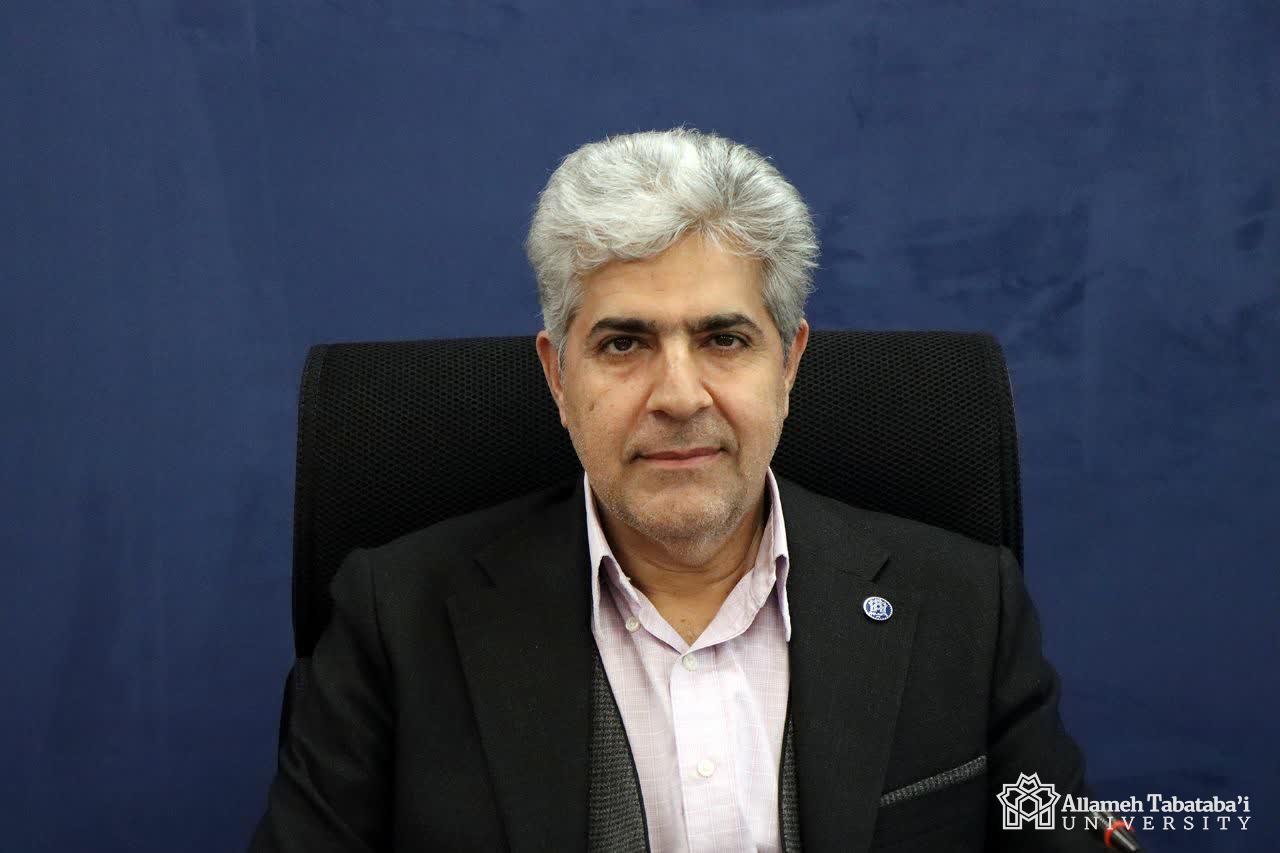
In a comprehensive annual report, Dr Shoja Ahmadvand, President of Allameh Tabataba'i University (ATU), detailed the university's major accomplishments over the past academic year across six key domains: Resource Management, Education, Research, Student Affairs, Cultural and Social Activities, and the Science and Technology Park. Dr Ahmadvand emphasized that these milestones were achieved despite national challenges and financial constraints.
Addressing the faculty, staff, and the broader ATU community, Dr Ahmadvand acknowledged the unique challenges of the past year—including national security incidents and regional conflicts that temporarily disrupted university operations. Nevertheless, he noted, the university successfully maintained its momentum and implemented transformative programs.
Resource Management and Infrastructural Development
Highlighting administrative achievements, the ATU President announced the finalisation of the long-awaited employee housing project in Karaj. Following intensive negotiations with the Ministry of Roads and Urban Development, free land has been allocated to ATU staff housing cooperative. Furthermore, to support the university's administrative workforce amidst national budget rejections for general salary hikes, ATU successfully secured a 50-million-Rial welfare allowance from the Ministry of Science, matching it with an additional 50 million Rials from the university's exclusive revenues. This results in a 100-million-Rial monthly increase for staff, alongside finalized salary increases for faculty members.
On the infrastructural front, several major long-term projects have entered the execution phase. These include the groundbreaking for a 650-seat central conference hall, the initiation of the new Faculty of Social Sciences building, and excavation works for the Faculty of Law and Political Sciences. Extensive renovations were also carried out across multiple faculties and student dormitories to enhance the academic environment.
Educational Excellence and Transparent Recruitment
In the realm of academics, Dr Ahmadvand introduced a newly reformed educational structure featuring a "Development and Excellence in Education" department. He also highlighted the comprehensive digitisation of educational services and emphasized that transparent and accelerated faculty recruitment remains a core strategic priority for the 1404 (2025–2026) academic year to boost quality and public trust.
Research and Policy Impact
Underlining ATU’s shift toward problem-solving and community-responsive research, the President pointed to flagship initiatives such as the "AI in Humanities" project and the "Migration Studies Program." Reflecting this pragmatic approach, the volume of university research contracts saw a remarkable surge, growing from 210 billion Rials in the previous year to 750 billion Rials. Additionally, ATU faculty contributed 26 policy briefs on critical economic, social, and cultural issues, many of which have directly informed national executive policymaking.
Student Welfare and Cultural Engagement
To ensure students feel "at home," ATU significantly upgraded dormitory living conditions, introducing standard study rooms, renovated kitchens, and enhanced sports facilities. A notable addition is the "Gol Narges" health and counseling center established in the Shahid Salamat dormitory. The university also hosted various national student events, including a national cycling championship.
Culturally, ATU seeks to bridge academia with broader socio-political spheres. Dr. Ahmadvand announced the upcoming inauguration of a standard university cinema dedicated to screening national and patriotic films. He also lauded the students' outstanding performances in national cultural and Quranic festivals, which placed ATU among the top three universities nationwide in this sector. Finally, new student entrepreneurship schemes have been launched, allowing students to produce university supplies and handicrafts while studying.
 Soroush