

ATU Professor Discusses Regional Security and International Law in an Exclusive Interview with Greek Media
Report by the Directorate for International Academic Cooperation –
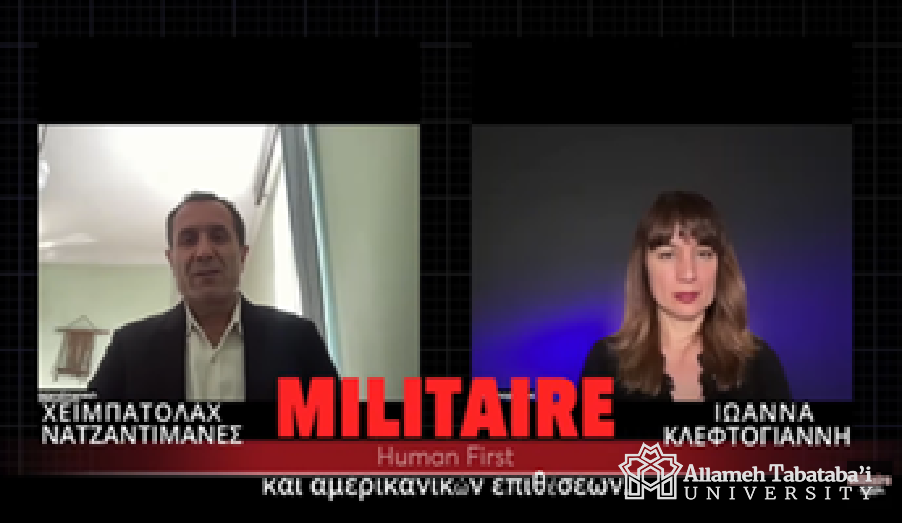
In a significant stride toward enhancing international media relations and amplifying the voices of Iranian academia, Dr Heybatollah Nazhandimanesh, a distinguished professor at Allameh Tabataba'i University (ATU), recently participated in an extensive interview with the Greek news network Militaire News. Published on 6 April 2026, the interview addressed critical geopolitical developments, international law, and Iran's strategic doctrines.
During the interview, Dr Nazhandimanesh highlighted the deliberate targeting of Iranian academic and scientific centres by the Zionist regime and the US, framing it as an intentional effort to undermine Iran’s scientific infrastructure. Despite these hostilities, he emphasized the steadfast resilience of the Iranian people and their unwavering support for the nation's political system and the Supreme Leader, who holds the ultimate authority regarding any potential international negotiations. He dismissed recent claims by US officials regarding diplomatic talks as mere "psychological warfare."
From a legal and strategic perspective, the ATU professor articulated Iran's comprehensive readiness for a prolonged conflict. He warned that any ground invasion by American forces would result in a catastrophic "new Vietnam" for the aggressors, firmly stating that no invading soldier would return alive. Furthermore, invoking international maritime law, Dr Nazhandimanesh reaffirmed Iran's legitimate right during wartime to control the Strait of Hormuz and restrict the passage of vessels belonging to hostile states.
Addressing regional security, Dr Nazhandimanesh issued a firm legal reminder to neighbouring nations, explicitly citing Article 51 of the United Nations Charter. He cautioned that allowing their territories or bases to be utilized as launchpads for attacks against Iran would legally justify a reciprocal military response against the origin of the aggression. He warmly urged neighbouring Arab states to prioritise Islamic brotherhood and regional stability over alliances with foreign powers.
On the topic of Iran's nuclear program, Dr Nazhandimanesh noted that while Iran’s nuclear doctrine has historically remained strictly peaceful—rooted in a religious Fatwa—the current existential threats facing the nation could justify a strategic reevaluation. Speaking from his personal academic viewpoint, he suggested that Iran should consider withdrawing from the Non-Proliferation Treaty (NPT) and shifting its nuclear doctrine, pointing out the treaty's failure to safeguard Iran's facilities.
Finally, the professor systematically dismantled Western media narratives regarding internal Iranian affairs. He categorized exaggerated casualty figures from past protests as "fake news," emphasizing the Iranian government's transparency in publishing exact, verified data of the deceased.
The interview underscores ATU's ongoing commitment to engaging its scholars in global discourse to counter international misinformation. The broadcast has been highly impactful, successfully reaching European audiences and garnering over 6,600 views on YouTube within its first eight days of publication.
 Soroush